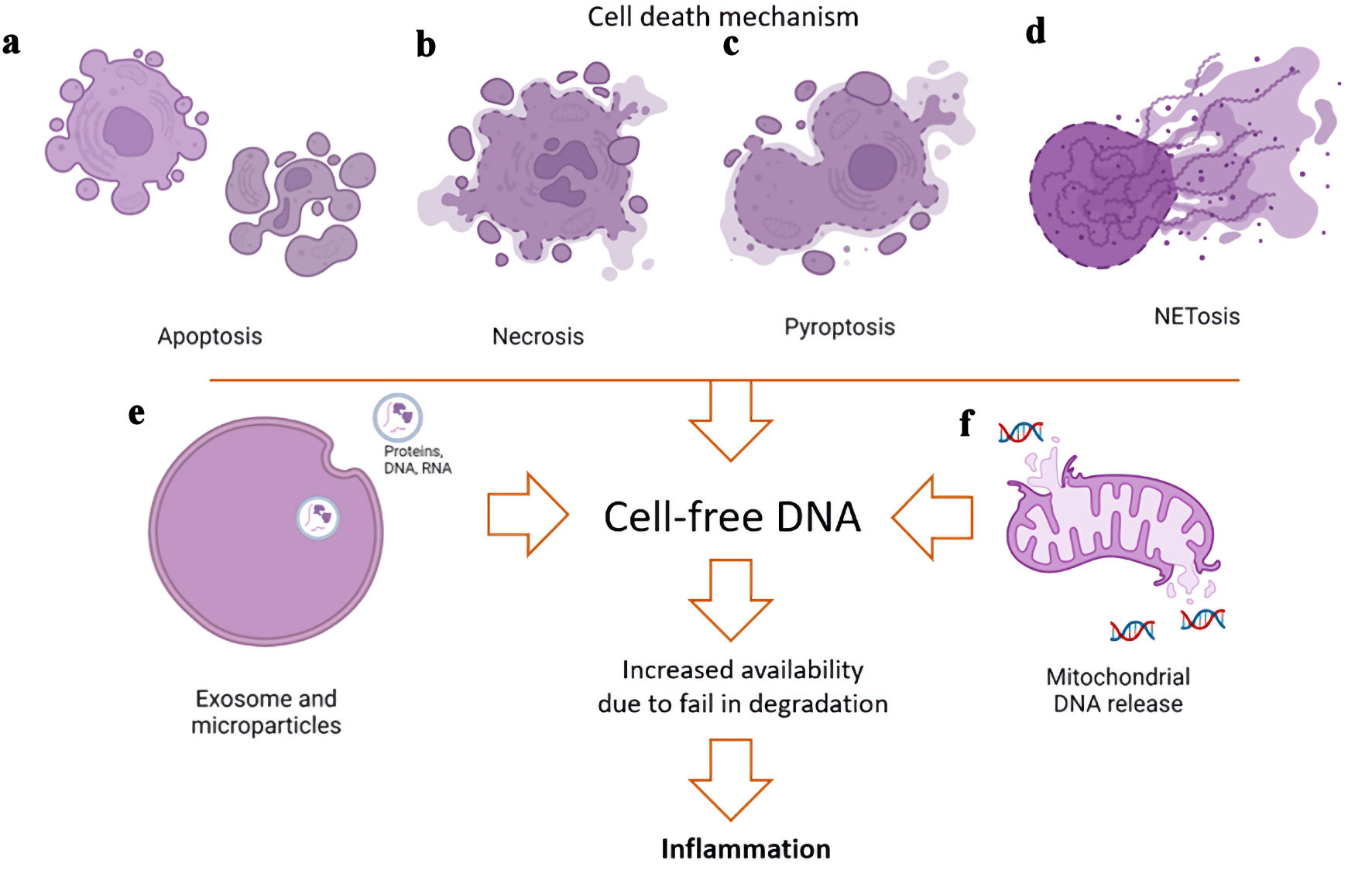
↓ Figure 1. Potential mechanisms of generation of
cell-free DNA (cfDNA) in extracellular spaces. The sources of the cfDNA have various etiologies and may
be released through normal physiological processes or pathologic states. (a) An important source of
extracellular vesicles (EVs) carrying nucleic acids is apoptosis of cells via caspase activation to
recycle and degrade components of cells at the end of their life cycle. (b) Conversely, necrosis that
occurs in response to injury results in cell swelling and lysis, releasing the cell contents in a rapid
and pro-inflammatory manner. (c) Inflammatory insults such as infections can result in pyroptosis,
whereby the cell undergoes swelling, membrane blebbing, chromatin condensation, and random DNA
fragmentation. (d) Neutrophil extracellular trap (NET) activation and release of DNA allow neutrophils
to kill invading pathogens through apoptotic-like changes without activation with caspase. Suicidal
NETosis leads to rupturing of the plasma membrane and release of the neutrophil contents into the
extracellular space. (e) Exosome or microparticle EV releases with proteins, DNA, or RNA as their cargo.
(f) Release of mitochondrial DNA can lead to an increased expression in pro-inflammatory genes by the
activation of the cGAS-STING pathway.